

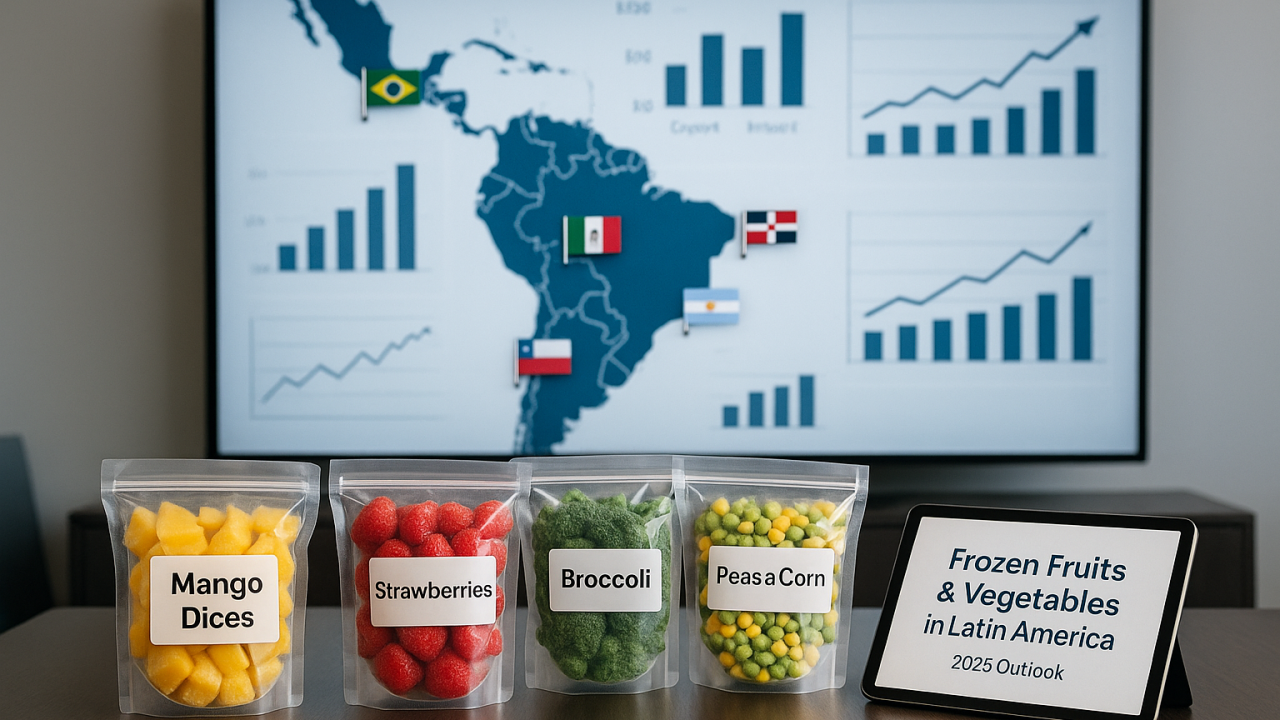
Frozen Fruits & Vegetables Market in Brazil, Chile, Argentina, Mexico, and the Dominican Republic (B2B Overview)
1. Consumer Culture & Historical Preferences
Traditional Fresh Produce Reliance: In all five countries, diets have long centered on fresh fruits and vegetables. Consumers historically purchase produce from open-air markets (e.g. mercados in Mexico, ferias in Chile) and cook meals from scratch at home. This cultural norm meant frozen fruits and veggies were historically rare on shopping lists. Families valued the taste and quality of fresh-picked produce and saw little need for freezing when local supply was abundant year-round (especially in tropical climates like Mexico and the Dominican Republic). In Argentina and Chile, seasonal availability influenced consumption; however, even there, people often preferred importing fresh off-season produce or canning over using frozen products. Overall, a strong “fresh is best” mindset prevailed across generations.
See content credentials
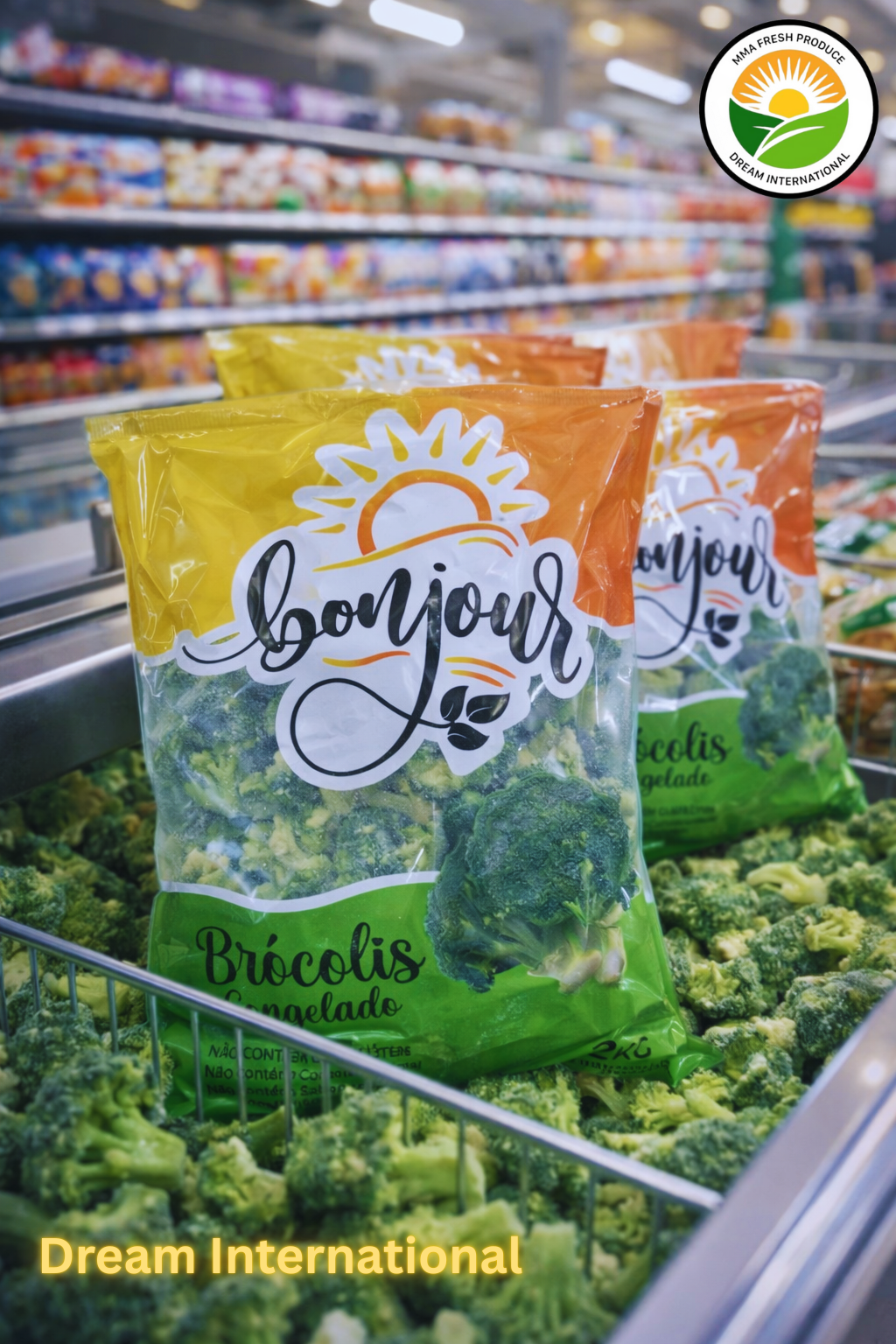
Egyptian Frozen Broccoli - Bonjour Brand to Brazil

Home Cooking & Local Markets: Home-cooked meals using raw ingredients are a point of pride in Latin American culture. Traditional recipes – from Brazilian stews to Mexican salsas – have been built around fresh veggies, herbs, and fruits. Local wet markets and street vendors have been convenient, affordable sources for daily cooking needs. This reliance on local markets reinforced the habit of buying produce in small quantities to use the same day, rather than stocking up on frozen items. In the Dominican Republic, for example, fresh tropical fruit is consumed in juices and desserts almost immediately after harvest, leaving little motivation historically to freeze and store such produce. Similarly, in Brazil and Mexico, the older generation associated freshness with nutrition and flavor, viewing frozen alternatives with skepticism.
Impact of Urbanization & Retail Modernization: Over the past few decades, rapid urbanization and the rise of modern retail formats have slowly shifted these historical patterns. As cities expanded, supermarkets and hypermarkets proliferated – bringing frozen food aisles into the mainstream retail scene. The introduction of frozen foods in the mid-20th century (e.g. frozen meats and vegetables entering Brazilian grocery stores) was initially met with consumer skepticism and low uptake. However, as more households acquired refrigerators/freezers and as people migrated to urban centers, exposure to frozen products increased. By the 2000s, large grocery chains in capitals like São Paulo, Mexico City, Buenos Aires, and Santiago dedicated shelf space to frozen produce, educating consumers on their convenience. This urban retail growth planted the seeds for later acceptance of frozen fruits and vegetables, although adoption remained slow among those who maintained the tradition of daily fresh market shopping. In summary, historically all five countries preferred fresh produce and home cooking, but the groundwork for change was laid as modern urban lifestyles emerged.

2. Changing Consumer Behavior in the Last 10 Years
Over the past decade, consumer attitudes toward frozen fruits and veggies have undergone a notable shift in Latin America. Several behavioral trends have converged to drive greater acceptance:
- Shift Toward Convenience: Busier lifestyles and growth in dual-income families have led consumers to seek time-saving meal solutions. In Brazil, for instance, over 87% of the population now lives in urban areas, and many urban Brazilians and Mexicans face long commutes and less time for food prep. As a result, ready-to-use frozen vegetables (pre-cut carrots, mixed veggie blends, etc.) and easy microwaveable items have gained traction. Consumers appreciate that frozen produce cuts down washing, peeling, and chopping time. This convenience trend is especially evident among younger professionals and working parents in large cities, who view frozen ingredients as a shortcut to cook “homemade” meals faster. In the past 10 years, buying a bag of frozen peas or broccoli for a quick dinner has become far more common than it was a generation ago.
- Health & Wellness Trends: Paradoxically, the global health movement has benefited the frozen produce category. Influenced by fitness and wellness trends worldwide, Latin American consumers are trying smoothies, juice cleanses, and low-carb diets – and frozen fruits/veggies play a role in these routines. For example, smoothie bowls and fitness shakes made with frozen berries, açaí pulp, or mango chunks have become popular in urban centers. The fitness-conscious segment appreciates that IQF (individually quick frozen) fruits have no added sugar and retain vitamins, making them convenient for nutritious drinks and post-workout snacks. Likewise, those pursuing portion-controlled diets are using frozen vegetable mixes as easy, pre-portioned ingredients for healthy meals. There is also a growing awareness that flash-frozen produce can be just as nutritious as fresh, since freezing locks in nutrients – a message often promoted by brands and nutritionists in the region. Overall, rising health consciousness has helped legitimize frozen fruits and veggies as a viable, even smart, option for meeting daily fruit/veg intake goals (e.g. having frozen berries on hand to blend into a morning smoothie).
See content credentials

- E-Commerce and Modern Grocery Adoption: The expansion of online grocery shopping and modern retail channels in the 2015–2025 period has made frozen products more accessible. In Mexico, for example, e-commerce grocers and delivery apps boomed – Amazon Fresh partnered with local platform Jüsto in 2024 to offer 4-hour delivery of groceries including frozen produce. This digital shift means consumers can get a wide range of frozen fruits and vegetables delivered to their door, including specialty items not always found in smaller neighborhood stores. The convenience of online ordering (which spiked during the pandemic) has introduced more people to buying frozen foods regularly. At the same time, brick-and-mortar supermarkets in these countries have continued to modernize and expand into smaller cities, often with larger frozen sections than before. Retailers are actively promoting frozen products through in-store signage and discounts, making them more visible to shoppers who might previously have overlooked them. The net effect is a broader adoption of frozen fruits and veggies across different regions and income segments, aided by the ease of purchase through modern retail and digital channels.
- Impact of COVID-19: The pandemic (2020–2021) was a pivotal moment that accelerated frozen food uptake. During COVID lockdowns, consumers in Brazil, Argentina, Mexico and beyond rushed to stockpile long-lasting foods, and frozen fruits/vegetables were among the staples they tried, often for the first time. Facing uncertainty and fewer shopping trips, people filled freezers with peas, spinach, frozen berries and the like to ensure a steady supply of produce while fresh markets were closed or restricted. This period significantly broadened the frozen customer base and helped overcome some prejudices. Many families discovered the practicality of frozen ingredients when fresh produce supply chains were disrupted. Post-pandemic, a portion of those consumers have kept frozen veggies and fruits as pantry staples (e.g. keeping a bag of mixed vegetables “just in case” or continuing the habit of buying frozen strawberries for smoothies). COVID-19 also boosted online grocery (as noted above), which further normalized buying frozen items. While foodservice demand temporarily dropped during lockdowns (e.g. restaurants buying fewer frozen fries), retail demand surged and ultimately remained higher than pre-pandemic levels. In summary, the last ten years – and especially the pandemic years – have seen Latin American consumers become more convenience-oriented, health-driven, and receptive to frozen produce, setting the stage for sustained growth in this category.
See content credentials

3. Market Demand & Top Product Categories
Overall Demand Landscape: In the five target countries, frozen vegetables (especially potatoes) dominate the category by volume, while frozen fruits are a smaller but fast-growing segment. As of the mid-2020s, industry data indicates that frozen vegetable consumption vastly exceeds frozen fruit in these markets – largely due to the popularity of frozen potatoes (French fries) in both retail and foodservice. For example, across Latin America, frozen potatoes account for roughly 80–90% of all frozen vegetable volume. This pattern holds in Brazil, Mexico, Argentina, and Chile, where French fries are in high demand by fast-food outlets and increasingly by consumers at home. Frozen fruits, on the other hand, have a niche but rising share of the market, driven by uses in smoothies, desserts, and as export commodities (like berries). It’s worth noting notable differences per country in product mix and consumption preferences:
See content credentials

- Brazil: The largest category by far is frozen vegetables, with emphasis on potato products. Brazil’s huge appetite for French fries (from fast-food chains and casual dining) makes frozen potato the top product. Domestic processors and importers supply items like frozen pre-cut fries, hash browns, and potato bites to restaurants and supermarkets. Beyond potatoes, Brazilians also consume other frozen veggies such as peas, corn, broccoli, and mixed vegetable medleys, often sold under local brands for home cooking convenience. The frozen fruit market in Brazil, while smaller, includes tropical offerings – notably frozen açaí pulp (widely used in smoothies/bowls), frozen strawberries and mango chunks. Açaí in particular has cultural resonance (traditionally eaten fresh in the North, but now popular as a frozen pulp nationwide). Overall, Brazil has a sizeable domestic production of frozen fruits & veg (around 150,000 MT in 2021) yet still relies on imports for variety. Its per capita consumption of frozen produce has been relatively low historically (around 5–6 kg of frozen veg per person annually in recent years, and well under 1 kg for frozen fruit), but these figures are gradually climbing as frozen options penetrate Brazilian kitchens.
- Mexico: Demand in Mexico is also led by frozen vegetables, especially potatoes. The country’s booming fast-food sector (including global chains and local eateries) drives enormous volumes of frozen fries and potato specialties. Mexican consumers, too, have begun buying more frozen veggies like broccoli, cauliflower, mixed peas-and-carrots, and bell pepper strips for quick meal prep – aligning with trends in Tex-Mex and Mexican cuisine where these can be handy (e.g. frozen corn for salsas, mixed vegetables for soups). Frozen fruits in Mexico have shown strong growth recently: frozen berries (strawberries, blueberries, raspberries) are popular for licuados (smoothies) and baking, especially given Mexico’s own berry industry which processes some of its yield into frozen form. There is also demand for frozen tropical fruits and pulp (such as mango, pineapple, and guava) used in juices, paletas (popsicles), and desserts. With rising health consciousness, more Mexican consumers keep frozen fruit for nutritious drinks or to make ice cream at home. Notably, Mexico’s per capita frozen veg consumption is still modest (estimated ~4 kg/year), but its growth rate has been among the highest in the region over the last decade. The availability of both local and imported frozen products in supermarkets like Walmart and Soriana has broadened product categories on offer, from basic veggies to prepared frozen blends tailored to Mexican cooking (e.g. pre-seasoned fajita vegetable mixes).
See content credentials
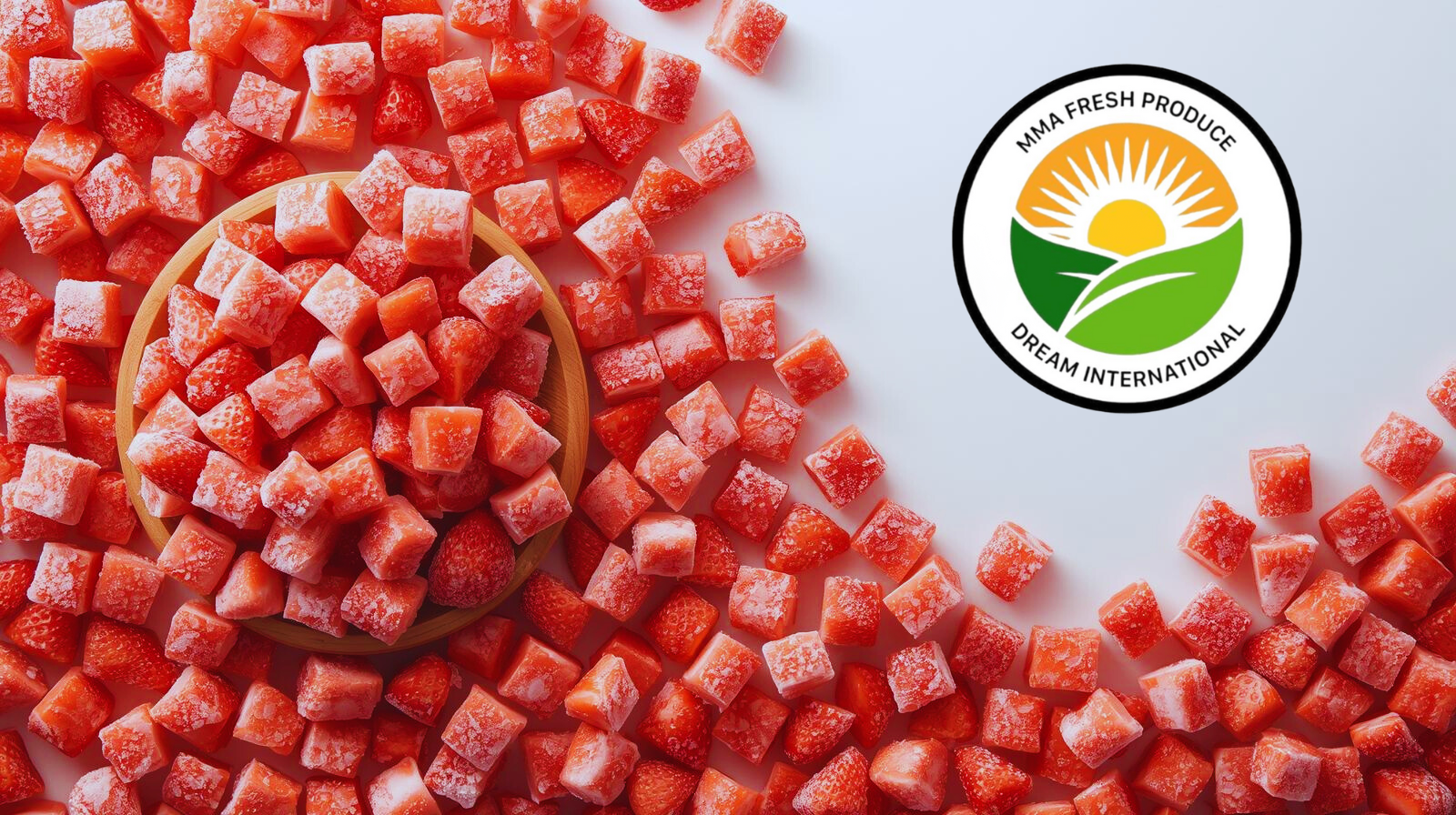
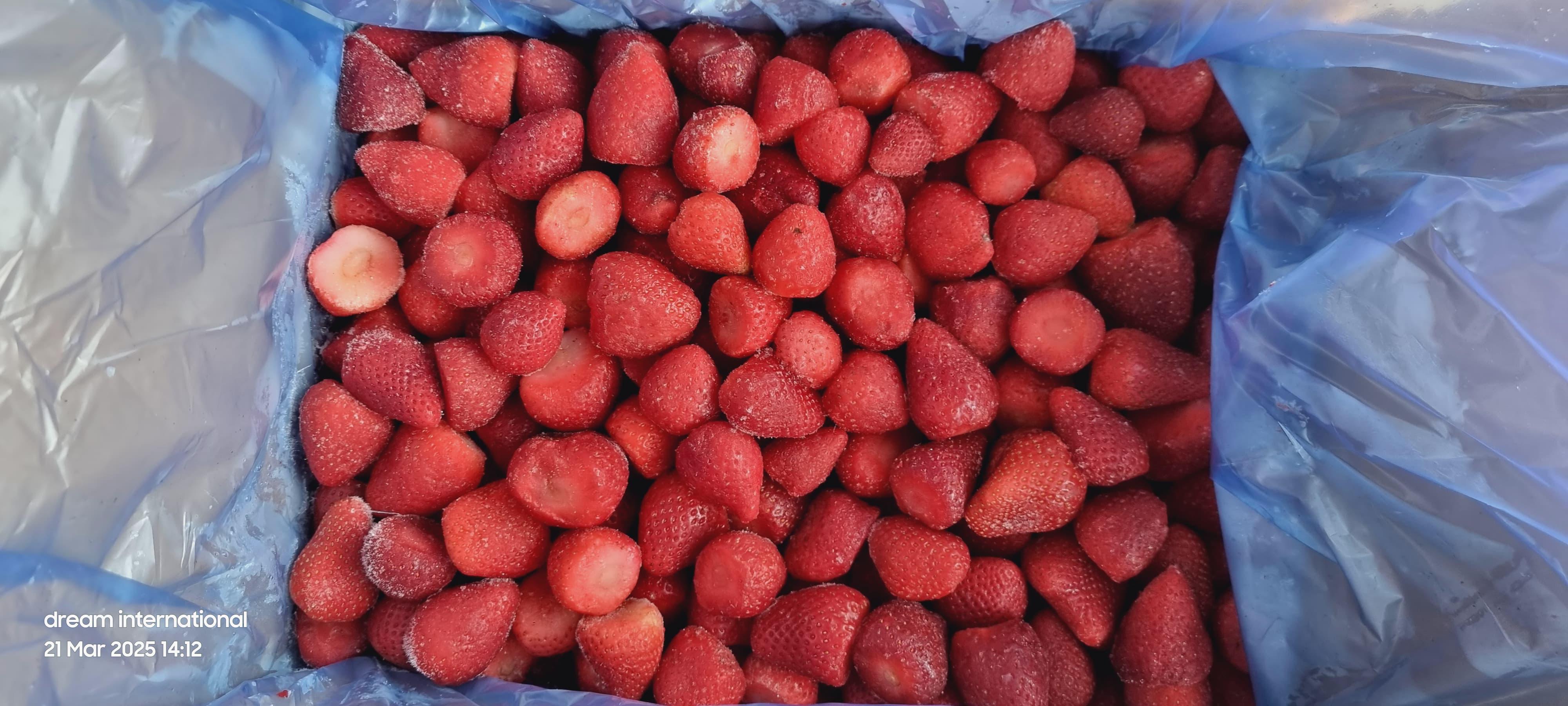
Egyptian Frozen Strawberry

- Argentina: In Argentina, frozen potato products similarly reign supreme in volume. Argentina has a well-developed potato processing industry, and frozen French fries are a staple supply for quick-service restaurants domestically and in neighboring countries. Argentine households also purchase frozen fries and potato croquettes for convenience, especially in urban areas. Other important frozen vegetables in Argentina include green peas, spinach, and mixed vegetable packs – these are commonly sold for use in traditional dishes like stews (guisos) or pies (tartas). Given Argentina’s strong agricultural base, many frozen veggies in the market are locally grown and processed. When it comes to frozen fruits, Argentina’s domestic consumption is relatively limited outside of specific uses like frozen berries for making jams or pastries. However, Argentina is a major producer of berries (strawberries, blueberries) and some of that harvest is frozen for export or domestic food manufacturing. So while the typical Argentine consumer might not buy large quantities of frozen fruit for home use, the country does have an industry segment producing frozen fruits (particularly berries and some fruit pulps) to meet foodservice demand (e.g. bakeries, ice cream shops) and export commitments. On a per capita basis, Argentina stands out with one of the higher frozen vegetable consumption rates in Latin America (around 8+ kg per person annually), reflecting a greater acceptance of frozen produce in daily life compared to many peers, likely due to the combination of local production and seasonal needs during winters.
- Chile: Chile’s market showcases a unique profile: frozen fruits are a prominent category due to Chile’s export-oriented berry industry, while domestically frozen vegetables (especially potatoes) are also very popular. Chile is one of the world’s leading exporters of frozen berries (such as blueberries, raspberries, and strawberries), with a significant portion of its fruit harvest quickly frozen for shipment to North America, Europe, and Asia. This means a robust processing sector exists, and domestically Chileans have ready access to high-quality frozen fruits. Chilean consumers themselves use frozen berries and fruits in smoothies, jams, and the country’s vibrant juice bars – giving Chile one of the highest per capita frozen fruit consumption rates in the region (nearly 3 kg per person). In the vegetable segment, Chileans are heavy consumers of frozen potatoes (the country reportedly has the highest per capita frozen vegetable consumption in Latin America, around 9–10 kg/year, largely driven by French fry intake). Fast-food outlets and restaurant chains in Chile rely heavily on frozen potato imports. Chileans also buy other frozen veggies like corn, peas, and pre-cut mixed vegetables for home cooking, as busy lifestyles in Santiago and other cities have increased demand for these convenience items. One notable difference in Chile is that consumers are somewhat more accustomed to frozen produce given the country’s export culture – seeing Chilean frozen blueberries in a local supermarket is normal. However, Chile must import many frozen vegetables (including fries) to satisfy local demand, since local production is more focused on export crops. This dynamic means Chile’s supermarket freezers contain a mix of domestically packed frozen fruits and imported vegetable products.
See content credentials

- Dominican Republic: The Dominican Republic’s frozen produce market is smaller in absolute terms, but with some unique demand drivers. The hospitality and foodservice sector (resorts, hotels, restaurants) plays a huge role in consumption. The DR has a thriving tourism industry that requires consistent supplies of fruits and vegetables, some of which are sourced frozen for convenience and food safety. As a result, the top frozen products in demand include frozen fruits – particularly berries and tropical fruit pulps – used in hotels for smoothies, cocktails, and buffet dishes. In fact, Dominican consumers on the whole have the highest per capita frozen fruit consumption in Latin America (~3.8 kg per person in 2024), a statistic driven largely by the hospitality industry usage as well as a growing local taste for smoothies. Items like frozen strawberries, blueberries, and mixed berry blends are commonly imported for use in beverage programs at resorts. The general public is also beginning to purchase frozen fruit (e.g. for home blender drinks), though fresh fruit is still usually preferred for direct eating. On the vegetable side, the Dominican Republic relies on frozen imports of staple veggies such as frozen mixed vegetables, broccoli, and potatoes (fries) mainly to supply restaurants and fast-food franchises. Local supermarkets in urban areas like Santo Domingo do stock some frozen veggies, but the variety is limited and consumer uptake is modest (most Dominican households still favor fresh produce from outdoor markets). Thus, the country’s frozen veg consumption per capita is relatively low. The key point is that in the DR, retail demand is secondary to foodservice demand – a reversal of some other countries. A significant chunk of frozen produce (fruit purees, diced vegetables, etc.) is consumed by hotels and catering companies to efficiently serve tourists and events. This B2B-driven usage differentiates the DR’s market profile from the others, which have larger retail segments.
Key Consumption Channels: Across these five countries, frozen fruits and vegetables flow through three main channels – retail, foodservice, and institutional – with varying importance by country. In retail (supermarkets and grocery stores), sales of frozen produce have been rising as more consumers keep frozen items at home. This channel is crucial for incremental growth: for example, Brazilian and Mexican supermarkets now regularly promote frozen vegetable mixes to household shoppers. Foodservice, however, remains the dominant volume driver for certain products (especially frozen potatoes). Fast-food chains, casual dining restaurants, smoothie shops, and hotels collectively purchase huge quantities of frozen produce. In Mexico and Brazil, fast-food outlets (from McDonald’s to local chains) account for a very large share of frozen french fry usage. In the Dominican Republic, as noted, hotels and resorts are heavy users of frozen fruits and some veggies due to convenience and consistency needs. Institutional buyers (schools, hospitals, company cafeterias) use frozen produce to a lesser extent; they may appear in government nutrition programs or contracts (for instance, a school lunch program might use frozen peas or carrots for ease of storage). Among the five countries, institutional demand is relatively minor compared to retail and commercial foodservice, though it exists (especially in Argentina and Chile where some public institutions leverage frozen produce to manage costs and avoid seasonal gaps). The balance of channels can differ: Chile and Argentina likely have a higher proportion of retail frozen sales given more consumer acceptance, whereas Mexico and Brazil tilt toward foodservice volume. Overall, the foodservice channel is key for vegetables (ensuring quality and standardization, e.g. every French fry serving tasting the same), while retail is important for fruits and diversified veggies (catering to health-minded shoppers and home cooks). The interplay of these channels means B2B buyers (like distributors or importers) often focus on servicing restaurants and hotels for volume, but they are increasingly also targeting retail chains with packaged frozen fruit/veg products as consumer demand grows. Notable too is the emergence of private-label frozen product lines in retail (discussed further below), which indicates supermarkets themselves are investing in the category due to its rising demand.
Differences across the five countries are summarized by the fact that Brazil, Mexico, and Argentina have very large overall volumes dominated by frozen vegetables (especially potatoes) and are starting to diversify into other veggies and fruits; Chile has a high per capita usage and an export-driven fruit segment; and the Dominican Republic, while smaller, is distinctive for its heavy reliance on frozen fruits in the hospitality sector. These nuances mean B2B buyers must tailor their approach to each market’s demand profile – e.g. focusing on fries and staple veg for Mexico/Brazil, versus emphasizing tropical fruit pulps or berry supply for the Dominican hospitality industry.
4. Import vs. Export Dynamics
The five countries show a mix of import reliance and export strength in the frozen fruits and vegetables sector, with some acting as net importers and others as significant exporters for certain products. Below is an overview of each country’s trade dynamics and key products and partners:

- Brazil: Brazil is a net importer of frozen fruits and vegetables. Despite its large domestic production of fresh produce, Brazil imports substantial volumes of frozen items to meet consumer and industry demand for variety and off-season supply. In 2021 Brazil imported roughly 35,000 metric tons of frozen fruits & veg (and this has likely grown further by 2024). Key imports for Brazil include frozen vegetables like peas, corn, and mixed veg (much of this coming from neighboring Argentina and Chile, which have surplus harvests of temperate crops). Brazil also imports specialty items that are not widely produced locally – for example, frozen mushrooms and vegetable mixes from China, and occasionally European supplies of frozen potato products. Additionally, Brazil brings in frozen french fries to supplement local processing, especially during spikes in demand. On the export side, Brazil does ship out some frozen produce, but in relatively limited quantities (approximately 40,000 MT in 2021). Its frozen exports are focused on tropical fruits: Brazil is known to export frozen açaí berry pulp, mango chunks, and other exotic fruit purees to markets like the United States, Europe, and Asia. There is also a growing niche for Brazil’s frozen vegetables (such as cassava or hearts of palm) in specialty markets abroad, but volumes are modest. Trade partners for Brazil’s exports include the US (a top buyer of açaí and tropical frozen fruit) and emerging interest from Europe and Japan for unique Brazilian fruits. Within LATAM, Brazil’s frozen exports are minor – historically Brazil has been more an importer from its neighbors. In summary, Brazil’s frozen produce sector is characterized by imports filling the gap in standard veggies and fries, while exports capitalize on unique fruits. This dynamic is likely to continue, with Brazil remaining an attractive market for foreign suppliers (given its size) while also slowly expanding its own export portfolio of tropical offerings.
- Mexico: Mexico plays a dual role as both a major exporter and an importer in the frozen fruits and vegetables trade. On one hand, Mexico is one of Latin America’s largest exporters of frozen vegetables, particularly frozen potatoes (fries) and some other veg products. Multinational and local processors operate in Mexico (taking advantage of its potato-growing regions and proximity to the U.S.), producing frozen fries not only for domestic use but for export throughout the region. In 2024, Mexico exported on the order of 300,000+ tons of frozen vegetables – accounting for nearly 45% of all frozen vegetable exports from Latin America. Key destinations for Mexican frozen veg exports include other LATAM countries (Central America and the Caribbean), and notably the United States. Under NAFTA/USMCA, Mexico has been able to send frozen produce to the U.S. market (for example, some fast-food supply chains in the US source frozen produce from Mexico). Mexico also exports certain frozen fruits – for instance, it is a world leader in fresh berries and increasingly ships frozen strawberries and berry mixes to global buyers (though much of Mexico’s berry export is fresh, a portion is individually quick frozen for year-round supply). At the same time, Mexico imports a significant volume of frozen produce to complement what’s available domestically. In 2024, Mexico’s frozen vegetable imports were valued around $560 million, one of the highest in the region. These imports often include specialty or offseason vegetables (e.g. Mexico might import frozen asparagus or mixed veggies from Peru and Guatemala, or high-quality fries from European suppliers if demand spikes). Mexico also imports some frozen fruits that are not locally abundant; for example, berries or stone fruits from Chile during certain times of year, or frozen tropical fruit purees from countries like Vietnam or Thailand for use in food manufacturing. The U.S. is another key import source: due to geographic proximity, American frozen vegetables (like bulk packed broccoli, cauliflower, etc.) cross into Mexico for retail and foodservice. So Mexico’s trade relationships are extensive – north-south trade with the U.S., intra-regional trade with Latin peers, and even overseas partners in Europe and Asia. Overall, Mexico tends to be a net exporter in volume terms for vegetables, but in value terms it also spends heavily on imports for diversity and demand fulfillment. For B2B buyers, this means Mexico is a competitive sourcing hub for certain products (fries, some fruits) while simultaneously being a large import market open to new suppliers who can offer quality or cost advantages.
- Argentina: Argentina is primarily a net exporter of frozen fruits and (especially) vegetables. It has leveraged its strong agriculture sector to build a frozen processing industry that serves both domestic needs and regional demand. Most notably, Argentina is a powerhouse in frozen potato exports – it supplies a huge share of the frozen french fries consumed in neighboring Brazil, Chile, and other Latin American markets. In the mid-2010s, for example, over half of Argentina’s frozen food exports (by value) went to Brazil, mainly fries for fast-food chains. Argentine companies like McCain (which operates locally) have large plants producing fries that are shipped throughout South America. Besides potatoes, Argentina also exports other frozen vegetables such as peas, corn, and spinach, largely within the region. For instance, Argentine frozen peas find their way into Brazil’s retail freezers, and frozen vegetable mixes are sold in Chile under various brands. In total, Argentina exported around 180,000+ tons of frozen vegetables in 2024, making it the second-largest LATAM exporter after Mexico. On the import side, Argentina buys relatively little frozen produce internationally. Domestic production covers most of the demand, and Argentine consumers still lean on fresh produce for many needs. There are some imports – for example, Argentina might import minor quantities of frozen tropical fruits or vegetables that can’t be grown domestically (the country has a temperate climate, so tropical items like pineapple or mango might be imported frozen for use in foodservice). However, these volumes are quite small. One area of import growth could be processed fruit ingredients: if local industries need specific fruit purees or off-season berries, they might import frozen versions from Chile or Peru. But overall, Argentina’s frozen fruit & veg trade is characterized far more by outgoing shipments than incoming. Its main trading partners on exports are Brazil (number one), Chile, Uruguay, and Paraguay within South America, and to a smaller extent markets like the United States (especially for frozen fruits like berries – e.g., Argentina does export frozen blueberries to the US and Europe, taking advantage of counter-seasonal harvest). Summing up, Argentina is an export-driving country for the frozen category – especially serving Latin America’s demand for vegetables – and presents less opportunity for foreign exporters since its import needs are limited and often met by local supply.
- Chile: Chile has a two-sided trade profile: it is a major exporter of frozen fruits and an importer of many frozen vegetables. On the export front, Chile is renowned for its fruit exports, and this extends to frozen formats. Chile is one of the world’s leading exporters of frozen berries (blueberries, raspberries, strawberries) and also ships frozen cherries, grapes, and other fruits globally. In 2024, Chile exported roughly 150,000+ tons of frozen fruits – about a quarter of all Latin America’s frozen fruit exports – reaching markets such as the United States, Canada, Europe (especially Germany, UK), and Asia (China). These frozen fruits are prized for their quality and off-season availability (Chilean berries supply the northern hemisphere during its winter). This export strength means Chile’s domestic frozen fruit industry is very advanced technologically (widespread IQF use) and globally competitive. Conversely, when it comes to frozen vegetables, Chile cannot meet all its internal demand and thus relies heavily on imports. The Chilean market imports large quantities of frozen potatoes (fries) to satisfy local fast-food chains and retailers – much of these imports come from Argentina, the USA, and the European Union (European suppliers like Belgium or Netherlands sometimes fill fry orders). In 2024, Chile imported around 157,000 tons of frozen vegetables (including potatoes), placing it among the top importers in the region despite its smaller population. Other imported frozen veggies into Chile include items like frozen mixed vegetables, broccoli, and cauliflower, which may come from countries such as China or Peru. Regionally, Chile also imports from Guatemala and Colombia to some extent, as those countries have growing processing industries. This dynamic – exporting high-value fruits while importing staple vegetables – is somewhat unique to Chile. It means for a B2B buyer that Chile is an attractive source for certain products (if one is looking to buy frozen berries, Chile is a key origin), but simultaneously Chile offers a ready market for selling other frozen goods (if one is a supplier of frozen vegetables or fries, Chilean distributors are likely importers). Within Latin America, Chile trades with neighbors like Argentina (importing veg) and also sells some frozen fruit to Brazil and Mexico. Globally, its main trade partners are aligned with its fruit customers and veg suppliers as described. In net terms, Chile likely runs a surplus in frozen fruit trade value and a deficit in frozen veg – reflecting its specialization in what it produces best.
- Dominican Republic: The Dominican Republic is predominantly an import-oriented market for frozen fruits and vegetables, with minimal exports. Being a smaller island economy, the DR doesn’t have a large freezing industry for produce and instead brings in products to satisfy domestic and tourist industry needs. Frozen fruit imports are particularly significant: the Dominican Republic imports a variety of berries and other fruits that are not grown locally in sufficient quantity. A striking example is frozen strawberries – by 2024, the DR was importing over 3,000 tons of frozen strawberries annually. Historically the DR sourced these from the USA, China, Spain, and Peru, but very recently Egypt has become the dominant supplier. (Notably, Egyptian exporters capitalized on rising demand; between 2018 and 2024, Egypt’s frozen strawberry shipments to the DR went from virtually zero to about 3,000 tons, seizing over 70% of the Dominican market for that product by 2024). This shift underscores how new non-traditional partners are entering the Caribbean market with competitive offerings. The Dominican Republic also imports other frozen fruits like berries mixes, mango chunks, pineapple, and tropical fruit pulps, often used by hotels and juice companies. On the vegetable side, the DR imports frozen vegetable blends, French fries, cassava (yuca) fries, and sometimes specialty veg. Key partners include U.S. suppliers (given proximity – for example, U.S. companies export frozen potatoes and mixed veggies to the DR) and regional exporters like Costa Rica or Guatemala for certain veg products. Additionally, as mentioned, countries like Egypt have started supplying frozen vegetables too (Egyptian frozen green beans and assorted veggies have found their way into some Caribbean markets, including the DR). The Dominican Republic’s exports of frozen produce are negligible – the country focuses more on exporting fresh fruits like bananas and avocados. There have been some initiatives to produce frozen fruit pulps for export within the Caribbean, but volumes are small. Therefore, the DR is largely a net importer, making it an attractive market for exporters from around the world looking to sell frozen strawberries, berries, and standard vegetables. Its main trading partners on the import side are the United States (processed potatoes and veg), the EU and China (some fruits/veg historically), and increasingly countries like Egypt for fruits. Intra-LATAM imports (from say Chile or Peru) also occur, especially for berries when prices are favorable. For businesses, the Dominican case exemplifies a market driven by hospitality sector demand and willing to source globally for quality and price – a key opportunity for external suppliers.
See content credentials

Summary of Import/Export Roles: In broad terms, Brazil and the Dominican Republic are net buyers of frozen fruits & veg, Argentina and Chile are net suppliers (Argentina mainly veg, Chile mainly fruit), and Mexico straddles both sides with significant import needs but also strong export output. The main traded products are frozen potato products (fries) – moving from producers like Argentina/Mexico/USA to importers like Brazil, Chile, DR – and frozen berries – moving from Chile/Mexico to consumers worldwide (and to DR’s tourism sector). Regionally, there is a robust south-south trade: e.g. Argentina -> Brazil (fries), Chile -> Brazil (some veg, although Chile mostly imports veg), Mexico -> neighbors (veg), etc. Globally, the five countries engage with North America (U.S. supplies and buys), Europe (a buyer of fruit; a supplier of some veg), and Asia/Africa (increasingly supplying certain items, as illustrated by Egypt’s inroads). For B2B buyers, understanding these trade flows is crucial. Importers in these countries often seek reliable overseas partners to fill gaps (like Dominican importers seeking year-round berry suppliers, or Brazilian distributors needing frozen peas and mushrooms). Conversely, exporters in these countries (like Chilean berry processors or Mexican fry manufacturers) are looking for distribution channels abroad. Knowing who is a net importer vs exporter helps identify where there’s demand for external suppliers: e.g. Brazil, Chile (for veg), and the DR present clear import opportunities, whereas selling into Argentina might be tougher given its self-sufficiency.
5. Trends Driving the Frozen Category
Several current trends are propelling growth and innovation in the frozen fruits and vegetables sector across these Latin American markets:
- Health-Conscious Products: Consumer demand for healthier options is shaping new product development in frozen aisles. Companies are introducing organic frozen fruits and veggies and emphasizing “natural” credentials (no preservatives, no added sugar or salt). For example, one trend is offering 100% additive-free frozen produce – just the pure fruit or vegetable, often with prominent labeling about retaining nutrients. This caters to shoppers who prioritize clean eating and might previously have avoided frozen foods thinking them overly processed. Additionally, we see a rise in portion-controlled and diet-specific frozen products: smoothie packs pre-portioned with frozen fruit and spinach for a single serving, or steamable vegetable medleys with no sauce or seasoning (letting health-conscious consumers season to their needs). Even “superfood” frozen blends (including combos like kale, avocado, and mango chunks) are emerging, aligning with global wellness crazes. The focus on health extends to the frozen supply for foodservice as well – for instance, juice bars proudly advertising that they use frozen berries with no sugar added, or restaurants sourcing organic frozen vegetables for farm-to-table cred. This health-driven trend is expected to continue driving the category, as consumers increasingly recognize that quick-frozen produce can be just as healthy as fresh and often more convenient for sticking to diet plans.
See content credentials

- Adoption of IQF Technology: The spread of Individual Quick Freezing (IQF) technology throughout Latin America has significantly improved product quality and expanded the range of frozen offerings. IQF allows fruits and vegetables to be frozen rapidly, piece by piece, preserving texture, color, and nutritional value far better than older freezing methods. In countries like Chile and Mexico, many processors have invested in modern IQF tunnels – enabling delicate products like berries, avocado cubes, mango slices, and even broccoli florets to be frozen without turning mushy. This has driven growth by making frozen produce more appealing (e.g., IQF broccoli that isn’t waterlogged and retains a firm bite will find more takers among chefs and consumers). Locally, the adoption of IQF has also allowed for innovation in products: we now find exotic frozen items that weren’t common before – such as frozen dragon fruit, passion fruit pieces, hearts of palm, and edamame – being produced in or imported to these markets. IQF technology has particularly fueled the frozen fruit boom in Chile (high-quality IQF berries) and is improving vegetable quality in Brazil and Argentina. Moreover, IQF enables processors to cater to foodservice with custom cuts and mixes (for example, an IQF vegetable mix tailored for a soup recipe, with each ingredient freezing separately to avoid clumping). As more Latin American producers adopt this tech, the overall perception of frozen fruits and veggies improves (since the end products look and taste closer to fresh). IQF also reduces the need for additives (no need for sugar syrups or brine, since pieces don’t stick together), reinforcing the “natural” positioning of frozen produce. In short, ongoing technological upgrades like IQF are a key driver, ensuring high quality and thus encouraging both exports and domestic consumption.

- Expanded Cold Chain & Retail Access: Improvements in cold chain logistics and retail infrastructure are enabling frozen products to reach more consumers than ever before. Over the last few years, there’s been notable investment in refrigerated storage and transport in these countries. For instance, new cold storage warehouses near ports and city hubs in Brazil and Mexico are reducing spoilage and making distribution of frozen goods more efficient. Likewise, more refrigerated trucks (and even small freezer vans for last-mile delivery) are in operation, which helps frozen distributors expand into secondary cities and rural areas. On the retail end, supermarkets have expanded their freezer capacities – many stores have added extra freezer cases as the product range grows. Even smaller format grocery stores and convenience stores in urban areas now often dedicate a freezer to frozen fruits/veg, a practice that was uncommon a decade ago. In Chile and Argentina, some premium produce stores are beginning to carry frozen lines (e.g. a gourmet shop might sell frozen organic berries alongside fresh produce). The expansion of modern retail chains into previously under-served regions (like northern Mexico or northeast Brazil) also introduces frozen products to new customer bases. Another facet is the growth of cash-and-carry wholesalers and club stores (Costco, Sam’s Club, Makro, etc.), which stock bulk frozen fruit and veg for small restaurant owners and families – this has boosted volume demand and awareness. All these improvements mean frozen products are not only more widely available but also more reliably kept at the right temperature, preserving quality until they reach the consumer. As the cold chain continues to strengthen, wastage drops and profitability improves, encouraging retailers to stock more variety. In summary, better logistics and retail penetration are crucial enablers of the frozen category’s growth, turning it from a niche segment into a mainstream staple in many places.

In addition to the above, it’s worth noting the ongoing trend of convenience product innovation which ties into these drivers: many companies are now launching ready-to-cook frozen kits (for example, pre-seasoned stir-fry vegetable mixes, or frozen fruit smoothie kits with mixed berries and kale). These capitalize on both the health angle and convenience, and are made possible by IQF tech and improved distribution. This trend responds to consumer needs and further propels category growth by adding value beyond plain raw veggies.
6. Challenges and Barriers
Despite the positive momentum, the frozen fruits and vegetables sector in Latin America faces several challenges and barriers that B2B stakeholders must navigate:
- Infrastructure Limitations: While cold chain logistics have improved, gaps remain. In many regions outside the big metropolitan areas, infrastructure for frozen storage and transport is underdeveloped. Rural areas and smaller towns may have unreliable refrigeration facilities, leading to concerns about product integrity (intermittent electricity or fewer freezer trucks can break the cold chain). This limits market penetration for frozen goods beyond affluent urban centers. For example, in Brazil’s vast interior or parts of the Dominican Republic’s countryside, distributing frozen products can be costly and risky, restricting sales largely to cities. Logistics issues also include congested ports and highways that can delay deliveries – frozen items require speedy transit and any delay can compromise quality. Thus, the sector still contends with higher logistics costs and the need for investment in refrigerated infrastructure to ensure consistent nationwide coverage. Without further improvements, some retailers are hesitant to carry frozen produce in distant locations, seeing it as too risky. This infrastructural hurdle is a major barrier to reaching the full consumer base in these countries.
- Pricing and Competition from Fresh Produce: Frozen fruits and vegetables often struggle on price perception. Because these countries grow abundant fresh produce, fresh options can be very inexpensive (especially in peak season) from local markets. Consumers doing price comparisons frequently find frozen equivalents costlier – after all, processing, packaging, and freezing add to the cost, and imported frozen items include duties and transport costs. For price-sensitive shoppers, it’s hard to justify paying, say, X dollars for a bag of frozen broccoli when fresh broccoli is available cheaper (unless convenience is a priority). This is a challenge particularly in lower-income segments that form a large part of the population. Additionally, when fresh produce is in season, it floods the market at low prices, undercutting demand for frozen. In Argentina and Brazil, for instance, the fresh harvest of corn or peas each year might temporarily depress interest in frozen packs of those items. The competition from abundant fresh produce is a structural barrier; people often default to fresh when it’s cheap and available, viewing frozen as a secondary alternative or a luxury. Moreover, many foodservice operators (like independent restaurants or street food vendors) prefer buying fresh produce from wholesale markets daily, as it’s perceived to be the more economical choice, thereby limiting B2B sales of frozen into those channels. Until economies of scale or efficiency bring frozen prices down (or fresh prices rise due to shortages), the pricing issue will continue to affect adoption, especially in emerging markets like the Dominican Republic and parts of Mexico.

- Consumer Perception and Cultural Bias: A lingering cultural bias in favor of fresh over frozen remains a hurdle. Many Latin American consumers still associate “fresh” produce with superior quality, flavor, and authenticity. Frozen fruits and vegetables, by contrast, have been viewed historically as inferior – something that might be bland, soggy, or laden with preservatives. Even though modern freezing preserves quality well, these perceptions change slowly. For example, Brazilian surveys have found that a segment of consumers believes frozen vegetables are less tasty or less nutritious than farm-fresh, reflecting a lack of trust. Some of this is rooted in tradition: cooking with fresh ingredients is seen as a hallmark of love and good hospitality, whereas using frozen shortcuts might be judged as cutting corners. There is also a misconception that frozen products must contain additives or are overly processed (in reality, most are just frozen, but consumer education is needed to convey that). In markets like Mexico and the DR, older generations often stick to fresh and might even view frozen produce as something for foreigners or for emergencies only. This mindset creates a marketing challenge – companies must invest in advertising and demos to prove that frozen peas can be as green and sweet as fresh, for instance. Overcoming deep-seated biases will likely require time and continued exposure. That said, attitudes are gradually improving among younger, urban consumers who are more open to convenience foods. Still, the overall trust in frozen quality is not yet on par with fresh produce, and that gap in perception is a barrier to faster market growth.
- Education and Awareness: Tied closely to perception is the need for consumer education about frozen produce benefits. Many consumers simply are not fully aware of the nutritional and safety aspects of frozen fruits and veggies. Misconceptions abound – some think frozen produce has preservatives or that it loses all its vitamins. Others may not know how to properly use frozen ingredients (for instance, how to cook them without overdoing it, or how not to refreeze thawed items). Educating consumers on these points is a challenge that the industry faces. Retailers and brands have only recently started to communicate messages like “Frozen = Freshness locked in” or printing recipes on packages to teach people how to use frozen spinach in a soup, etc. There’s also an educational aspect in terms of food safety and waste reduction: consumers could benefit from knowing that frozen produce can help reduce spoilage (you only use what you need from the bag) and that it’s picked at peak ripeness which can make it more nutritious than week-old “fresh” items. Without sufficient public awareness campaigns, many potential customers remain on the fence. In markets like Argentina and Chile, where the concept of frozen foods is more mature, consumers have a better grasp due to years of marketing and availability. But in Brazil and Mexico, and definitely in the Dominican Republic, there is still work to be done in teaching consumers when and why to choose frozen. B2B buyers (such as importers or retailers) often note that moving product can be slow until consumers are taught its advantages. Building trust – convincing chefs, homemakers, and vendors that frozen produce is high-quality and in some cases the smarter choice – is an ongoing effort that requires coordination across producers, distributors, and even government food agencies.
In summary, the sector must contend with logistical and perceptual challenges: developing the cold chain further, keeping pricing competitive, and shifting consumer mindset. Companies that proactively address these barriers – e.g. investing in supply chain efficiency to lower prices, running marketing campaigns highlighting frozen produce quality, and ensuring consistent product excellence – will be better positioned to expand in the Latin American frozen produce market.

7. Future Outlook & Opportunities
Market Growth Outlook (Through 2030): The frozen fruits and vegetables market in these Latin American countries is projected to continue on a growth trajectory through the rest of the decade. While growth rates may not be explosive, they are solid as the category moves from niche toward mass market. Industry forecasts suggest that by 2030:
- Market Size & Growth: All five markets will see expansion in both volume and value. For example, Mexico’s frozen fruits & veg market, valued at about USD 414 million in 2024, is expected to reach roughly USD 512 million by 2033 (a steady CAGR of ~2.4% per year). Brazil’s market (which was around USD 280 million in 2021 for frozen produce) is anticipated to grow a few percent annually as well, potentially approaching the USD 400+ million range by the end of the decade. Smaller markets like Chile and the Dominican Republic should experience growth in high single digits percent annually, given their lower base and increasing adoption. Overall regional consumption of frozen vegetables in Latin America is forecast to exceed 3 million tons by 2035 (up from ~2.8 million in 2024), and frozen fruit consumption is projected to hit around 1.3 million tons in the same timeframe – indicating consistent incremental growth.
- Consumption Volumes: Consumption per capita is expected to rise gradually in each country. By 2030, countries like Chile and Argentina may see even higher per capita usage of frozen veg (perhaps surpassing 10 kg/person for Chile). Brazil and Mexico’s per capita figures will climb as more middle-class families incorporate frozen items weekly. The Dominican Republic’s per capita frozen fruit use might grow further if tourism and smoothie culture expand. In absolute terms, Brazil and Mexico will remain the largest markets by volume, simply due to population – Brazil’s annual frozen veg consumption might push well beyond 1.5 million tons by 2030, and Mexico’s could near 0.7–0.8 million tons, barring any economic setbacks. Argentina and Chile will grow modestly in volume, constrained a bit by population size and saturated french fry demand. The Dominican market volume is smaller but could see strong percentage growth, especially in fruit.

- Growth Drivers: Convenience, urbanization, and younger demographic preferences will continue to drive adoption. Also, external factors like climate change and produce seasonality may nudge more people toward frozen as a reliable alternative when fresh prices spike (for instance, if a poor harvest causes fresh veggie inflation, consumers may turn to frozen). The expansion of modern retail and e-commerce will also expose more consumers to the category. Not least, improved product variety (more local companies launching frozen lines) will entice consumers to try new items. The combined effect will be that the frozen fruit & veg sector likely grows faster than the overall economy in these countries, making it a bright spot in the food industry. Most analysts foresee mid-single-digit annual growth in value for the category across Latin America through 2030. So B2B buyers can anticipate a larger market with higher turnover, albeit with competition increasing as well.
Export Opportunities for Non-LATAM Suppliers: As these markets grow, they present valuable opportunities for suppliers from outside Latin America – notably countries like Egypt, India, Vietnam, and others – to export frozen fruits and vegetables into the region. Import demand is rising especially for products that are not sufficiently produced locally or where year-round supply is needed. Some key opportunities and examples include:
See content credentials

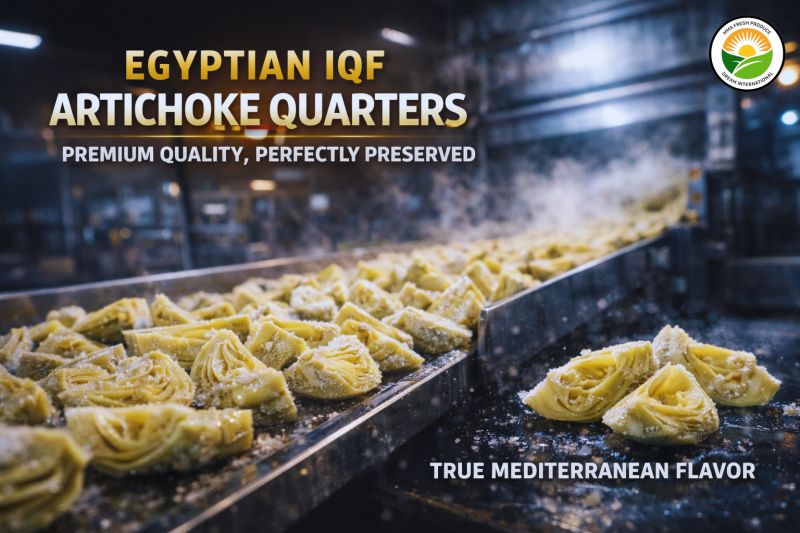
- Egypt has already made significant inroads by exporting frozen strawberries and vegetables to Latin America. Egyptian frozen strawberries have become highly competitive on price and quality – by 2024, Egypt captured over 70% of the Dominican Republic’s frozen strawberry import market, effectively displacing traditional suppliers. This success indicates that Latin American buyers (in DR and elsewhere) are open to new sourcing if the product meets their specs and cost needs. Egypt’s strength in IQF fruits (strawberries, mango chunks) and certain vegetables (like green beans, artichokes, okra) positions it well to supply import-dependent markets such as Brazil (which has begun importing more Egyptian frozen strawberries and beans in recent years) and the Caribbean nations.
- India is another potential supplier on the horizon. India has a large frozen vegetable industry (particularly IQF peas, mixed vegetables, and some fruits like mango). As Latin American demand for year-round peas, cauliflower, and other veggies grows, Indian exporters could fill gaps especially during South America’s off-season. There is also diaspora and culinary influence (for example, Indian mango pulp is popular globally – Latin America could import frozen mango or exotic veggies from India if competitively priced). The challenge for Indian suppliers will be logistics and ensuring competitive landed cost, but with improving shipping routes and India’s push to expand agri-exports, Latin America is a target market. Regions like the Middle East, Africa, and Latin America have been highlighted by Indian trade bodies as high-growth areas for frozen food exports.
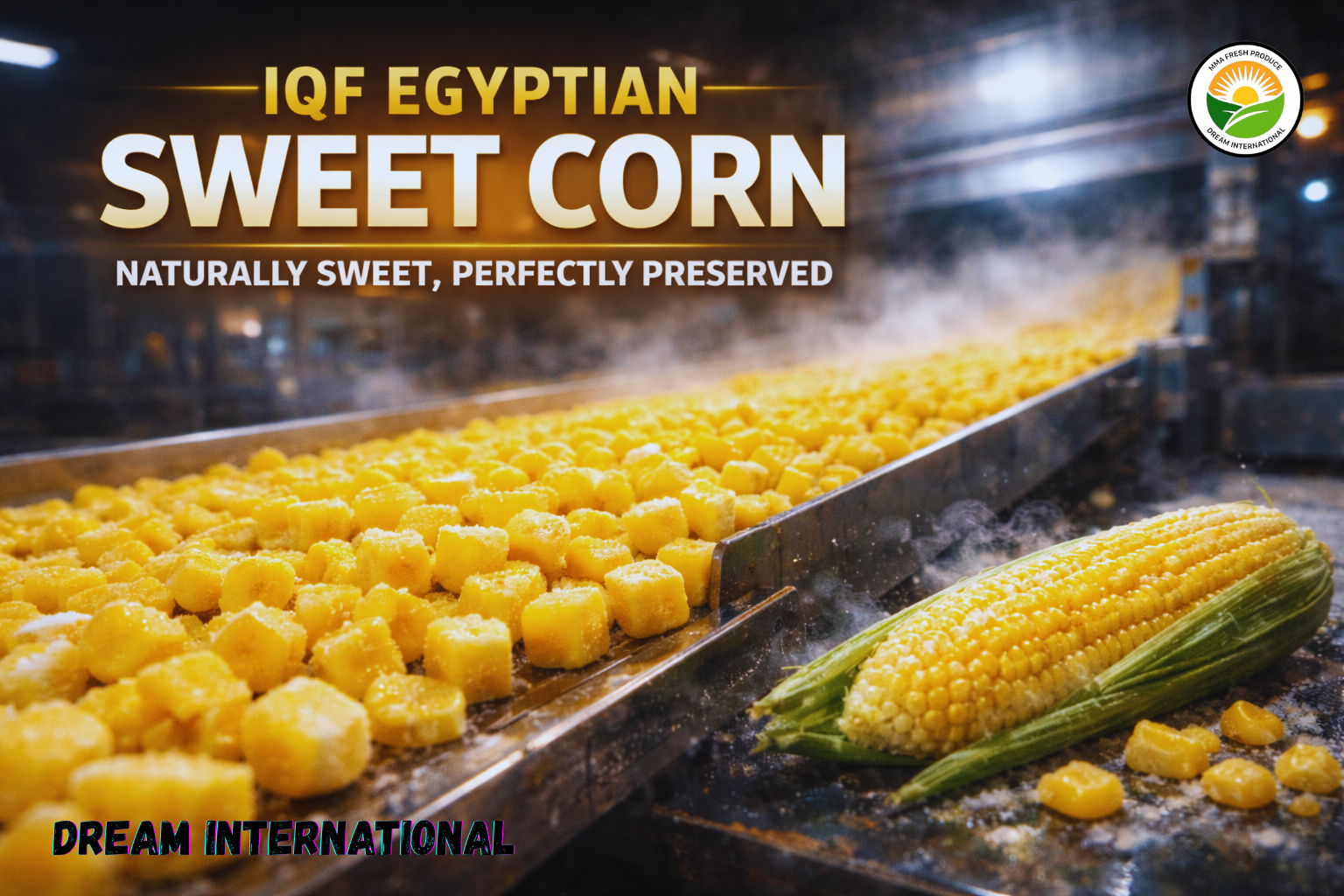
- Vietnam and Southeast Asian countries similarly present opportunity. Vietnam, for instance, has rapidly grown its fruit export sector – including frozen dragon fruit, passion fruit, durian, mango, pineapple etc. While Latin America produces many tropical fruits itself, there are niche items (like durian or certain tropical mixes) that could find a market in cosmopolitan cities or via Asian restaurant supply chains. Additionally, Vietnam and Thailand are major exporters of processed vegetable products (such as frozen sweet corn, edamame, mixed stir-fry veggies) which could complement Latin American imports especially in times of local shortfall. If, for example, a bad crop hits the region’s sweet corn, importers might look to Asian suppliers to cover demand.
- Other global players: China and European countries (Belgium/Netherlands/Poland for fries and veggies, Spain/Serbia for fruit) have historically been suppliers too and will continue to compete. But non-traditional players like Egypt and India have the advantage of lower costs and are increasingly meeting international quality standards, making them attractive alternatives.
For non-LATAM suppliers, the biggest opportunities lie in products like frozen potatoes, vegetable mixes, and berries where demand outstrips local supply. Brazil and Mexico, due to sheer size, are prime targets – even though they have domestic production, their import volumes are large and growing. There’s also opportunity in smaller markets like the Dominican Republic or Central America, which depend almost entirely on imports and have fewer trade barriers. To succeed, outside exporters should be ready to satisfy local regulations (sanitary certificates, etc.) and possibly partner with regional distributors who know the market. If done right, suppliers from Egypt, India, Vietnam, and beyond can diversify Latin America’s supply base. We’re already seeing a more global basket of sources: for instance, a Dominican foodservice importer might simultaneously bring in Egyptian strawberries, Indian mixed veggies, and U.S. potato products to get the best prices and availability. This globalization of sourcing will likely intensify through 2030.

Growth Potential in Private Labels: Another future trend is the expansion of private label frozen fruits and vegetables, which presents both a competitive challenge and an opportunity for B2B partnerships. Major supermarket chains in Latin America (such as Walmart Mexico, Carrefour Brazil, Jumbo in Chile, Coto in Argentina, etc.) are increasingly launching their own store-brand frozen product lines. Private labels are attractive to retailers as they offer higher margins and brand differentiation. We’ve started to see supermarket-branded frozen peas, mixed vegetables, and fruit blends on shelves next to traditional brands. The growth potential here is significant – as consumer trust in frozen grows, they may be quite willing to buy a store’s own brand if it's priced a bit lower than known brands. For suppliers, this opens opportunities to become contract packers or strategic suppliers for these private labels. For example, a quick-freeze facility in Peru might pack under a Chilean supermarket’s label to sell frozen mango cubes; or an Argentine processor might produce private-label fries for a Brazilian retail chain. Private labels will likely push the market toward more competitive pricing (good for volume growth) and perhaps more marketing spend by retailers to promote their own frozen lines. It also means increased focus on quality consistency – retailers will be keen to avoid consumer disappointment with their brand’s frozen foods. Thus, producers who can ensure reliable quality and cost-efficiency may find lucrative long-term contracts in supplying private label programs. Over the next 5–10 years, expect private labels to capture a larger share of frozen fruit/veg sales, mirroring what’s happened in Europe and North America, and in turn expanding category visibility (since stores often advertise their own products heavily).
Sustainable Packaging Initiatives: Looking ahead, sustainability is poised to influence the frozen food sector as well. Eco-friendly and sustainable packaging is an area of growing interest in these markets. Currently, most frozen fruits and vegetables are packed in plastic bags or plastic-lined boxes – materials that consumers are starting to scrutinize due to environmental concerns. There is an emerging opportunity (and pressure) to adopt sustainable packaging solutions such as recyclable plastic pouches, biodegradable films, or even paper-based frozen food packaging that can withstand low temperatures. Some multinational brands in Latin America have begun pilot programs (for instance, offering a line of frozen vegetables in fully recyclable bags, or using 50% recycled plastic content in packaging). As consumers and regulations gradually shift towards eco-consciousness, companies that preemptively use greener packaging may gain favor. This could also become a differentiating factor in B2B pitches – for example, a supplier might win a contract with a retail chain by offering a more sustainable packaging option for the chain’s private label frozen line, aligning with the retailer’s CSR goals. By 2030, we might see “plastic-neutral” claims or “packaging made from plant-based materials” on frozen food packs in these countries. While cost and technical constraints exist (frozen packaging must be moisture-proof and durable), the trend is clear globally and likely to be mirrored in Latin America’s markets. Stakeholders should thus watch for innovations in packaging and consider investing in upgrades that reduce environmental impact, as this will resonate with both consumers and regulators.

Clean-Label & Transparency Trends: Lastly, the future will likely see an amplified demand for clean-label products and transparency in the frozen fruits and vegetables segment. Consumers, especially Millennials and Gen Z in Latin America, are showing interest in where their food comes from and how it’s made. This means frozen produce brands (and suppliers to foodservice) will benefit from highlighting attributes like “100% natural,” “no preservatives,” “farm-sourced,” etc. We can expect more frozen products to proudly list a single ingredient (e.g. “Ingredients: Strawberries”) or to advertise that they are non-GMO, organically grown, or pesticide-free. Clean-label overlaps with the health trend but extends to ethical considerations – for instance, traceability. In the near future, a bag of frozen mixed vegetables might include a QR code that the consumer can scan to see the farms of origin for the carrots and beans inside. Some Latin American producers are already exporting with such traceability, and it may become a selling point domestically too. Clean-label also means minimal processing: flash freezing is actually a benefit here, as companies can market it as “frozen at the peak of freshness with nothing added”. We foresee growth in segments like organic frozen fruits and veg, even if from a small base, as well as in products catering to special diets (e.g. frozen riced cauliflower as a low-carb rice substitute, which hits the clean-eating and convenience notes). All these trends toward transparency and purity will shape product development and marketing. B2B buyers should anticipate questions about supply chain (origin, farming practices) from their retail clients, and those who can ensure clean-label attributes will have a competitive edge. Government regulations might also evolve to require clearer labeling or standards for “natural” claims, so being ahead of the curve is wise.
Future Outlook Summary: The outlook through 2030 for frozen fruits and vegetables in Brazil, Chile, Argentina, Mexico, and the Dominican Republic is broadly positive – marked by steady growth, evolving consumer preferences, and richer product offerings. We expect moderate but continuous market expansion, underpinned by urban lifestyle changes and the normalization of frozen produce in daily cooking. For B2B buyers and sellers, numerous opportunities are emerging: from tapping into growing import needs (for global suppliers) to developing private label lines, and innovating with health-focused products. Those who can overcome current challenges (infrastructure, cultural resistance) and align with trends (health, convenience, sustainability) are poised to thrive. By 2030, the frozen fruits and veggies sector in these countries will likely be larger, more competitive, and more integrated into both home kitchens and professional foodservice – a dynamic market environment with ample room for strategic growth and partnership.
Best Regards