

From Fields to Markets: How China, Egypt and Spain Shape the Global Strawberry Trade
Introduction
Strawberries are among the most widely cultivated berries in the world. The crop’s popularity stems from its flavor, aroma and versatility in fresh and processed markets. Global production has expanded markedly during the past few decades; scientific reports show that output increased from about 0.75 million tons in 1965 to over 9 million tons in 2021. This growth has transformed strawberries into a strategic crop for many countries, supporting rural employment and generating billions in export revenue. However, the drivers of expansion—rising demand, global trade and technological improvements—have also exposed growers to climate volatility, labor shortages, water scarcity and socio‑economic pressures.
This article summarizes the latest statistics on global strawberry production and profiles the leading producing countries. It also examines the challenges facing each major producer and highlights innovations that could shape the future of the sector. The research draws on primary sources such as the Food and Agriculture Organization (FAO), industry reports and recent news articles published during 2024–2025. All data are reported using the most recent figures available and converted to approximate millions of kilograms where necessary.
Global production and top producers
Worldwide, strawberries are grown in more than 80 countries, but production is highly concentrated. According to the World Population Review, the top six producers accounted for over 75 % of global output in 2023. The table below lists the ten largest producers and their estimated 2023 production volumes.
Top 10 Global Producing Countries

These rankings highlight how strongly production is dominated by China and the United States. Other countries—such as Egypt and Türkiye—have recently increased their market share, while European producers like Spain and Poland maintain sizable exports despite environmental constraints. The following sections review the situation in each of the leading producers and discuss the obstacles they face.
Country‑by‑country analysis
China
China cultivates about 140,000 hectares of strawberries and produces roughly 4 million tons, accounting for about 35 % of the world’s area and output. Cultivation is dominated by small‑scale family farms using simple plastic tunnels; high‑tech greenhouses cover only a small fraction of acreage. Major commercial varieties (e.g., Benihoppe and Tochiotome) originate from Japan and Korea and are selected for sweetness and large fruit. Exports are limited; most berries are consumed domestically.
Challenges:
- Rising labor costs and climate change: Chinese growers face high labor expenses, while warming winters and extreme weather events affect yields and quality. Many farms lack the capital to invest in climate‑controlled greenhouses.
- Variable plant material and food safety: The quality of nursery plants can vary widely, leading to inconsistent production. Strict food‑safety standards require improved traceability and residue management.
- Lack of strong brands: The domestic market is fragmented, and few private brands have international recognition. Branding and marketing improvements could help Chinese strawberries compete globally.
Responses: Government and industry initiatives promote professionalization, cluster development and integration with the broader berry sector. Investments in high‑tech greenhouses, disease‑free plant propagation and branding aim to address these challenges.

United States
The United States is the second‑largest producer, with nearly all commercial production concentrated in California and Florida. California supplies most of the domestic market and exports to Canada, Mexico and Asia.
Challenges:
- Labor shortages and rising costs: Reports from AgNet West note that California growers continue to struggle with persistent labor shortages and rising wages, leaving some fruit unharvested. Harvesting strawberries is labor-intensive, and mechanized solutions remain limited.
- Climate variability and water scarcity: A warmer‑than‑normal winter shifted the 2025 harvest curve, while cooler spring temperatures improved quality but slowed ripening. Droughts in California have already forced growers to adopt water‑efficient drip irrigation and to compete for limited supplies.
- High production costs and disease pressures: Inputs such as fertilizers, pesticides and packaging continue to rise in price. Soilborne diseases and pests (e.g., Verticillium wilt and spotted wing drosophila) require careful management.
Responses: Growers are investing in new cultivars, substrate production systems and robotics to reduce labor needs. The industry also advocates for immigration reform to secure a stable workforce and invests in integrated pest management to reduce chemical use.
Egypt
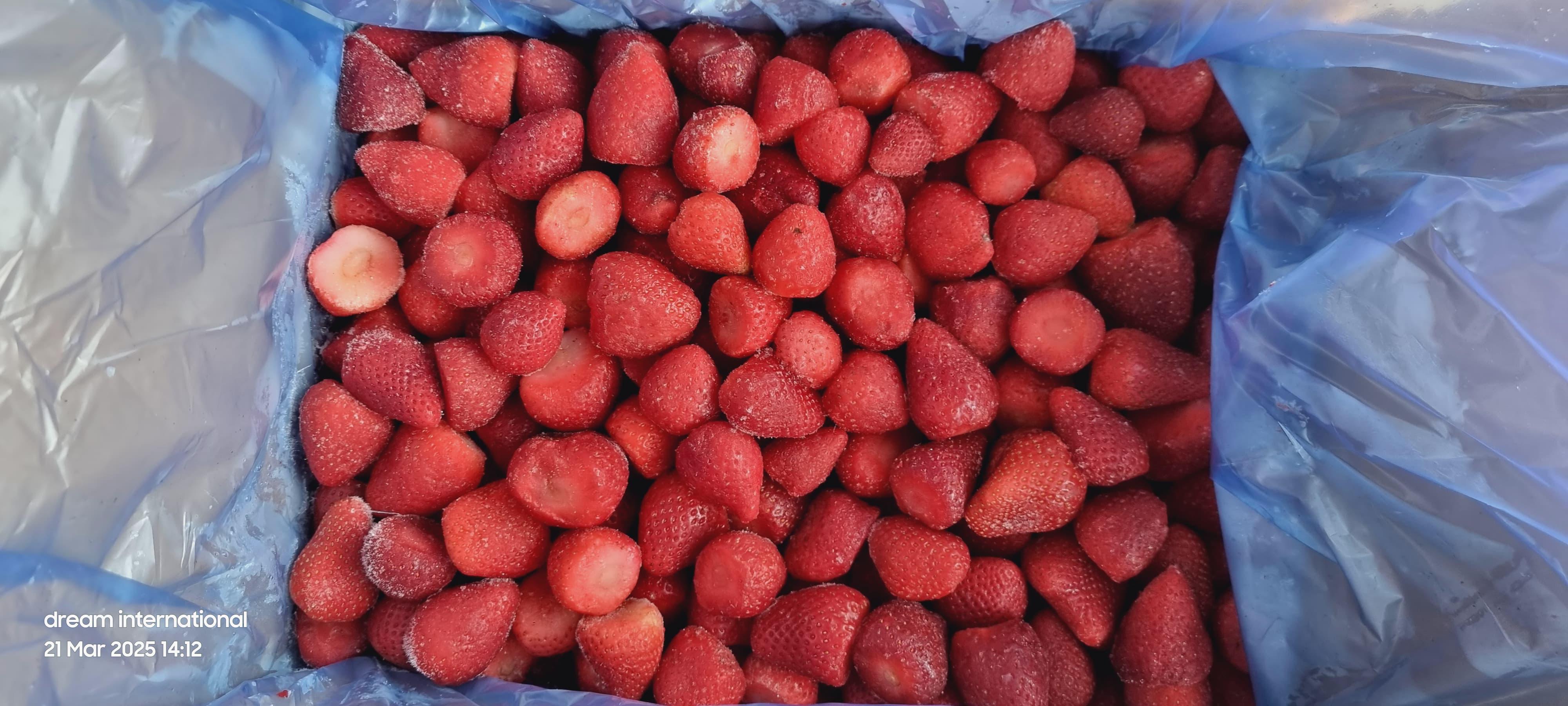
Egypt has rapidly emerged as the third‑largest global producer and the leading supplier of frozen strawberries. Tridge’s 2023 data shows output of about 731 million kg. The Nile Delta’s mild winters and sandy soils enable early production for European markets.
Challenges:
- Extreme weather and intensive farming: Egyptian growers report that climatic conditions are becoming more extreme, requiring intensive operations and raising costs. High temperatures shorten the growing season and increase disease pressure.
- High production costs and low fresh prices: Farm inputs (labor, equipment, treatments) are expensive, yet fresh strawberries fetch low export prices, leading many producers to shift to frozen processing to ensure profitability.
- Logistics and export bottlenecks: Limited availability of large cargo aircraft, coupled with strict European phytosanitary inspections, causes delays and spoilage.
Responses: Egypt is investing in large cold‑storage facilities to gain more control over supply timing and pricing. Growers are also expanding frozen processing capacity and adopting more resilient varieties to cope with heat and salinity.
New Harvest Production in Egypt

Türkiye
Türkiye (Turkey) ranks fourth globally, with around 677 million kg of strawberries produced in 2023. The country benefits from a long harvest window, spanning Mediterranean climates in the south to cooler regions in the north.
Challenges:
- Rising input costs: Producers cite high costs for fertilizers, energy and labor. Currency depreciation partially offsets costs for exporters but erodes domestic profitability.
- Climate variability: While strawberries can be grown in open fields and greenhouses, extreme heat waves or frosts can reduce yields. Government forecasts predict a 1.9 % decline in strawberry output in 2025 due to broader climate and production conditions.
- Crop diversification pressures: Rising costs and climate unpredictability are causing some farmers to shift toward less labor-intensive crops (e.g., cereals), reducing strawberry acreage.
Responses: Growers are experimenting with hydroponic and greenhouse systems to stabilize yields and extend the season. Expansion of exports to Russia and the Middle East helps counterbalance domestic challenges.
Mexico
Mexico is the world’s fifth‑largest producer and an essential supplier to the United States and Canada. Berry production increased 8 % in 2024, despite drought and currency volatility.
Challenges:
- Severe drought and heat stress: Producers in Michoacán’s Zamora Valley have faced drought and extreme heat, which reduce yields and force the use of amino‑acid and seaweed treatments to stimulate production. Irrigation restrictions and water scarcity are prompting farmers to reduce strawberry hectares or switch to raspberries.
- Rising labor and energy costs: Higher labor costs and subsidy cuts for electricity are squeezing margins. A strong peso between 2022 and 2024 eroded export competitiveness, though the situation improved in 2024.
- Erratic weather and disease: Unpredictable rainfall, followed by humidity, increases disease pressure (botrytis, powdery mildew) and disrupts harvest schedules.
Responses: Adoption of drip irrigation, drought‑resistant cultivars and greenhouse production has helped maintain yields and cut water use by 30 %. Growers continue to diversify into blackberries and raspberries to balance risk.
Spain
Spain is Europe’s largest strawberry producer and exporter, with most production concentrated in the province of Huelva (Andalusia). The 2024/2025 campaign produced around 210,345 tons, a 5 % decline from the previous year due to heavy rains during ripening. Exports, however, increased 9.5 % in value, demonstrating the sector’s resilience.
Challenges:
- Water scarcity and irrigation restrictions: Growers have faced 25–50 % reductions in irrigation quotas, forcing farms to prioritize high‑value crops. The restrictions led companies like Natural Berry to abandon strawberry production and focus on blueberries.
- labor intensity and slim margins: Strawberries require significant hand labor for harvesting and maintenance. High labor and production costs, coupled with modest market prices, have made margins thin. The IFAPA Prices and Markets Observatory reported that production in February 2024 reached only 9 % of the expected 20 %, largely due to water shortages.
- Socio‑economic issues: Investigative reports from The Guardian describe poor living conditions for migrant workers in Huelva. Around 40 % of the region’s 100,000 seasonal workers are undocumented and live in makeshift camps with limited sanitation. Workers often earn less than the Spanish minimum wage and lack proper housing and protective gear. These labor issues raise ethical concerns and could lead to stricter regulations and reputational risks for retailers.
- Environmental pressures: Strawberry farms share water resources with the Doñana National Park, a UNESCO‑listed wetland that has suffered from prolonged drought and over‑extraction. Consumer demand for eco‑friendly products and stricter European Union regulations require sustainable water use and lower pesticide residues.
Responses: Spanish growers are investing in “rustic” varieties that tolerate heat and drought, adopting substrate systems and macro‑tunnels to improve water efficiency, and diversifying into blueberries and raspberries. The Huelva growers’ association Freshuelva advocates for “mirror clauses” in trade agreements to ensure imports meet the same social and environmental standards

Poland
Poland remains one of Europe’s largest producers of processed strawberries and raspberries. At the Berry Forum 2025, speakers noted that expanding tunnel acreage alone is insufficient; improving production efficiency and data‑driven management is vital.
Challenges:
- labor shortages: The fruit and berry sector requires over 120,000 seasonal workers from Ukraine each year. Alternatives are limited, and panelists called for prioritizing agriculture in migration policy.
- Rising costs: labor, energy and inputs are rising rapidly. Growers must adopt automation, harvest planning and standardization to remain competitive.
- Retail demands: European retailers increasingly demand low‑residue fruit, prompting adoption of biological plant protection and reduced‑pesticide systems.
Responses: Industry stakeholders are promoting tunnel and gutter systems to improve yields (60–120 t ha⁻¹), while emphasizing workflow management and automation. Policies that streamline recruitment and protect workers’ rights could help secure labor supply.
Russia
Russia’s strawberry sector is growing but still relies heavily on imports. Domestic production reached roughly 261 million kg in 2023. A 2024 report noted that strawberry prices in Russia rose by 20 %, reaching €6.15 kg, and experts anticipate further increases.
Challenges:
- Economic and geopolitical pressures: The combination of sanctions, currency depreciation and supply‑chain disruptions has raised production costs and hindered access to imported inputs.
- Dependence on imports: Around 75 % of berries on the Russian market are imported, mainly from Türkiye, Morocco and Egypt. Domestic farming requires substantial investment; establishing a hectare of open‑field strawberries costs up to €30,800, while tunnel systems can exceed €205,000–308,000.
- labor intensity: Harvesting remains manual, adding labor challenges to the high capital costs.
Responses: Russian policymakers support domestic production through subsidies and protective tariffs. Some regions are investing in high‑tech greenhouses and vertical farming to extend the season and reduce reliance on imports, but progress remains slow due to financial constraints.
Brazil
Brazil’s strawberry production (~188 million kg in 2023) is concentrated in the southern states of Rio Grande do Sul and Santa Catarina. As a La Niña weather pattern returns, meteorologists warn that drought could reduce rainfall and planted area in the 2025/26 season.
Challenges:
- Climate variability: La Niña typically brings drought to southern Brazil and heavy rains to the North and Northeast. Recent episodes have caused consecutive crop losses between 2021 and 2023.
- Water stress and heat: Reduced rainfall combined with heat waves can stress plants, especially in plastic‑covered systems. Researchers warn that water shortages, coupled with high temperatures, could affect other fruit crops like coffee, indicating wider agricultural vulnerability.

Responses: Growers are adopting drought‑resistant cultivars, shading nets and precision irrigation. Research institutes advise adjusting planting schedules to avoid the hottest months and diversifying crops to spread risk.
Broader trends and sustainability considerations
- Climate adaptation: Across all regions, growers are encountering more frequent extreme weather—heat waves, frosts, heavy rain and drought. Adoption of drip irrigation, raised beds, mulches, shading nets and protected culture (greenhouses, tunnels) helps conserve water and protect crops. Breeding programs are developing “rustic” cultivars that tolerate high temperatures and water stress.
- labor and automation: labor shortages are chronic in high‑income countries (U.S., Spain, Poland) and raising wages in middle‑income producers (Mexico, Egypt). Investment in harvest aids and robotics is accelerating, but hand‑picking remains the norm. Securing seasonal labor through humane recruitment and fair working conditions is essential.
- Water management: Droughts and competition for water (e.g., Doñana in Spain) highlight the need for efficient irrigation, reservoir construction and better governance. Countries like Egypt are building large cold stores to reduce post‑harvest losses and time shipments.
- Diversification and value addition: Many growers are diversifying into raspberries, blueberries and processed products (frozen, jams) to spread risk and increase returns. Egypt and Spain have expanded frozen processing to offset low fresh prices. Mexico uses raspberries and blackberries to complement strawberry revenue.
- Ethical sourcing: Reports of poor working conditions in Spain’s Huelva region call attention to ethical sourcing. Retailers and consumers increasingly demand transparency, fair wages and safe housing for workers. Implementing “mirror clauses” requiring imports to meet EU social and environmental standards could level the playing field.
Conclusion
Strawberry production continues to grow globally, driven by consumer demand for fresh berries and healthy foods. Yet the sector faces multifaceted challenges—from climate change and water scarcity to labor shortages and social justice issues. The leading producers each confront a unique mix of pressures: China grapples with scaling up small farms while maintaining quality; the United States wrestles with labor and water constraints; Egypt and Türkiye must manage rising costs and climate volatility; Mexico and Brazil battle drought and erratic weather; Spain contends with water restrictions and labor ethics; Poland and Russia struggle with labor supply and economic pressures. Addressing these challenges will require innovation, policy support and international collaboration. Sustainable water management, climate‑resilient cultivars, fair labor practices and diversification into value‑added products will be crucial for ensuring that strawberries remain abundant, affordable and ethically sourced in the years ahead.