

Frozen vs. Fresh: Rethinking Fruit Nutrition in the Modern Supply Chain
A Scientific Review with a Focus on Strawberries (2020–2025)
As health-conscious consumers increasingly prioritize both nutrition and convenience, the comparison between fresh and frozen fruits has become an important topic. This article reviews recent scientific findings from 2020 to 2025, focusing particularly on strawberries—one of the most nutrient-rich and perishable fruits. It explores nutrient retention in both forms, the effect of storage conditions, and how emerging technologies are reshaping how we assess fruit quality.
Nutritional Comparison: Fresh vs. Frozen Fruits
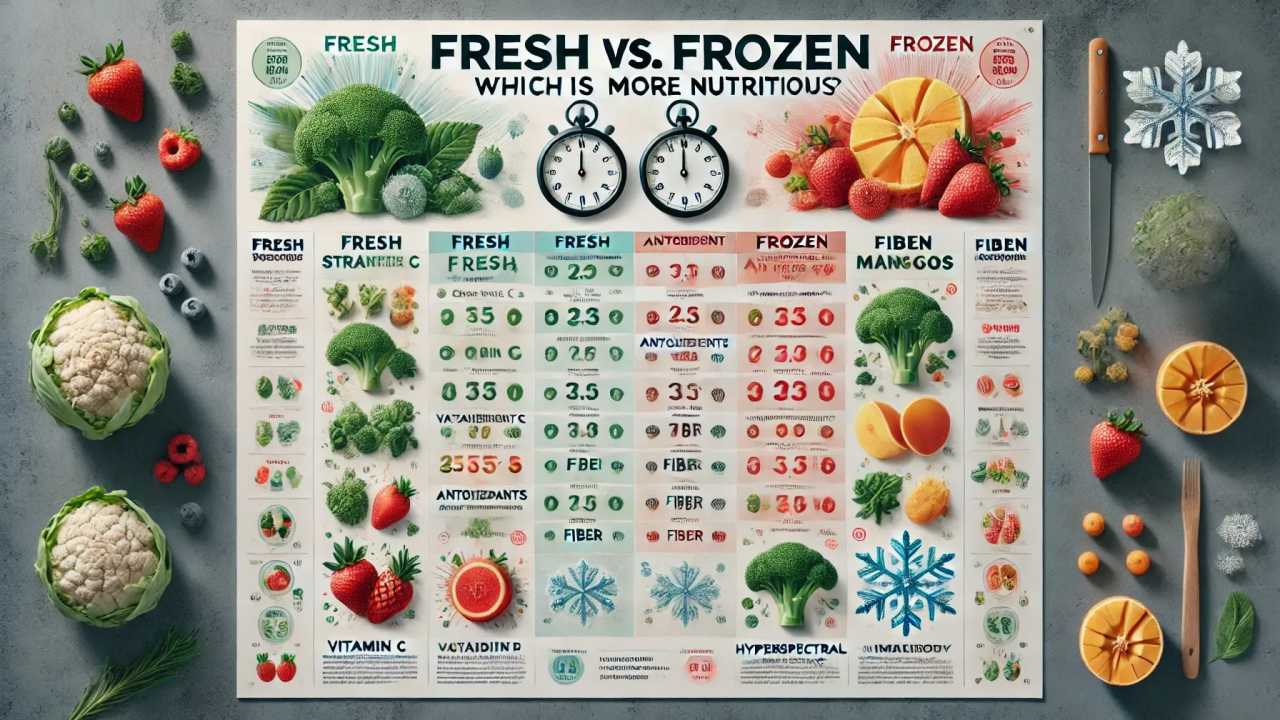
Scientific analyses consistently show that the nutritional value of fresh fruits can deteriorate quickly after harvest, especially when not stored under optimal conditions. In contrast, frozen fruits—processed and preserved shortly after harvest—often maintain or even exceed the nutritional value of their fresh counterparts in several key nutrients.
Handling and Time Elapsed from Harvest to Consumption.

These differences become more pronounced depending on the handling and time elapsed from harvest to consumption.
Strawberries as a Case Study
Strawberries are among the most studied fruits in the fresh vs. frozen debate due to their high vitamin C content, antioxidant compounds (such as anthocyanins and phenolic acids), and extreme perishability.
Vitamin C Retention
According to a 2023 study by Ilijovska et al. from Ss. Cyril and Methodius University in North Macedonia, strawberries stored at room temperature lost almost 100% of their vitamin C content within 11 days. In contrast, strawberries stored at 5–10°C retained approximately 60% of their vitamin C.
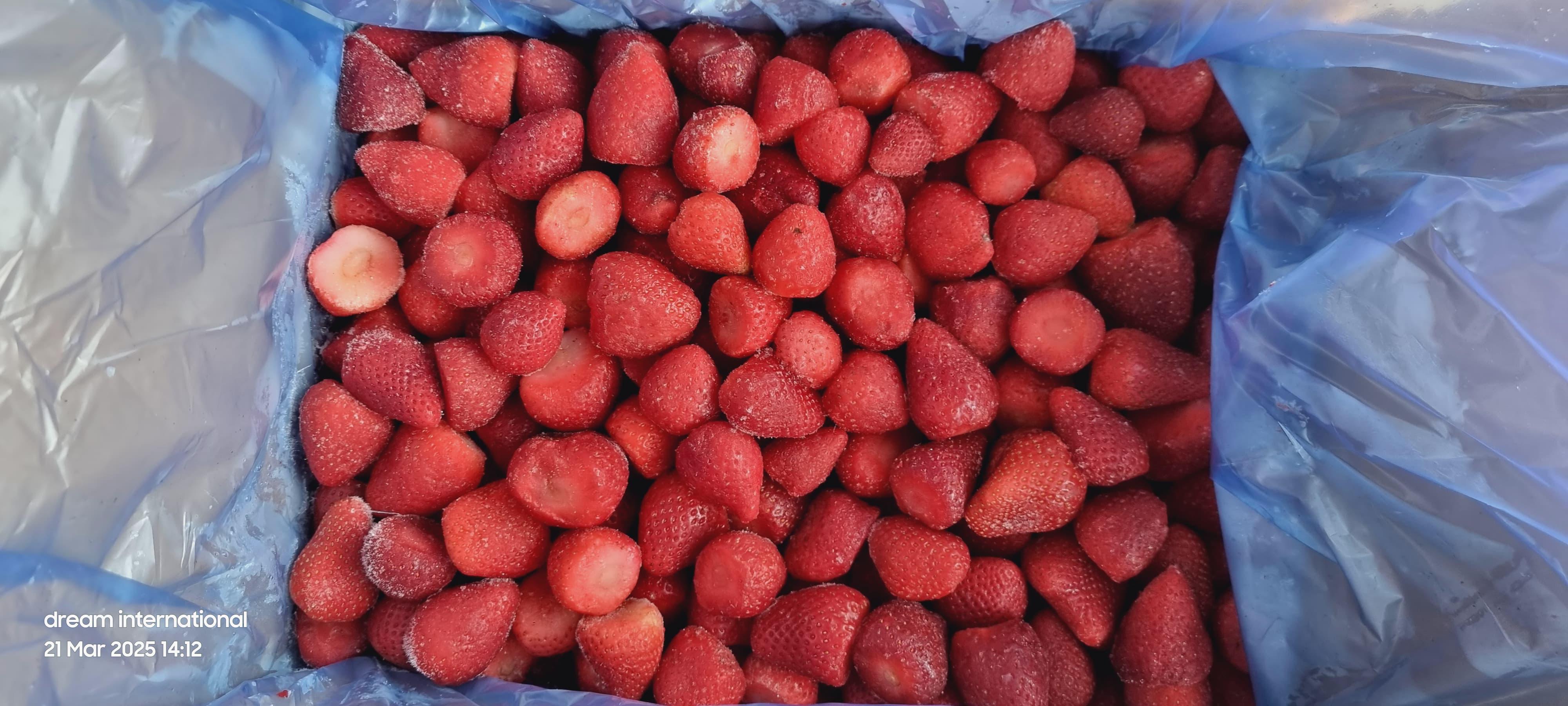
Frozen strawberries, when processed immediately after harvest and stored at -18°C, were found to retain most of their vitamin C. The freezing process halts enzymatic degradation and oxidation, key processes responsible for nutrient loss in fresh produce.
Antioxidant Stability
The same study by Ilijovska et al. also found that cool-stored strawberries preserved not only vitamin C but also total phenolic compounds and antioxidant activity. In comparison, strawberries stored at room temperature exhibited sharp declines in these bioactive components.
A 2022 study by the Institute of Food Technologists (IFT) further confirmed that frozen strawberries possess antioxidant levels comparable to or even exceeding those of fresh strawberries, depending on the duration and conditions of storage and transport.
Frozen Strawberry Sugar Content Brix Value

The Speed of Nutrient Degradation in Fresh Fruits
Research highlights the vulnerability of fresh produce to nutrient loss soon after harvest:
- Barrett et al. (2017) reported that green peas and strawberries can lose up to 50% of their vitamin C within just 48 hours at room temperature.
- A 2024 Sri Lankan study by Abeysuriya et al. examining 31 fruit species—including strawberries, guava, and papaya—found that antioxidant levels significantly declined in unrefrigerated conditions.
- Even refrigerated fresh fruits continue to experience gradual nutrient degradation over time.
These findings emphasize the importance of rapid consumption or optimal storage to maintain nutritional value in fresh fruits.
Fresh Broccoli Ready For Cleaning and Processing

Nutrient Preservation Through Freezing
Freezing is one of the most effective preservation techniques for retaining the nutritional quality of fruits. By rapidly lowering the temperature post-harvest, enzymatic activity and oxidation are significantly slowed.
Fruits like strawberries, blueberries, and mangoes—when flash-frozen shortly after harvest—retain much of their original nutrient profile. Kuhnle (University of Reading, 2023) observed that frozen fruits often outperform their fresh counterparts in terms of vitamin retention, especially after extended storage or transportation.
The 2022 IFT report also concluded that frozen fruits can match or exceed the vitamin content of fresh produce that has spent several days on supermarket shelves.
Fiber and Mineral Content: Unaffected by Freezing
Unlike water-soluble vitamins, dietary fiber and minerals such as potassium, calcium, and iron are not sensitive to temperature changes. According to research from UC Davis (2017), these nutrients are structurally stable and remain unchanged unless the fruit is peeled, damaged, or heavily processed.
Thus, both fresh and frozen strawberries provide equivalent amounts of fiber and minerals, making frozen fruits an excellent alternative in terms of overall dietary value.
Advanced Technologies in Nutritional Analysis
Recent advancements in analytical technologies and artificial intelligence are enabling more precise, non-invasive assessments of fruit quality and nutrient content.
Near-Infrared (NIR) Spectroscopy and AI
Wang et al. (2023) developed a machine learning model in conjunction with NIR spectroscopy to estimate vitamin C content in blueberries. This method allows for rapid, non-destructive quality checks of both fresh and frozen fruits throughout the supply chain.
Hyperspectral Imaging
Lu et al. (2024) used hyperspectral imaging to create visual nutrient distribution maps in strawberries. This technique provides detailed insights into how freezing affects nutrient location and concentration within the fruit.
Raman and Terahertz Spectroscopy
These cutting-edge tools are being used to quickly detect antioxidant levels and other compounds in a non-destructive manner, streamlining quality control in frozen fruit processing facilities.
Frozen Eggplant Slices

Conclusion: Which Option Is Better?
Fresh fruits offer maximum nutritional value when consumed shortly after harvest—ideally within 2–3 days. However, due to transportation delays, storage conditions, and prolonged shelf life, their nutrient content—especially vitamin C and antioxidants—often degrades by the time they reach consumers.
Frozen fruits, on the other hand, are typically harvested at peak ripeness and frozen within hours. This process preserves vitamins, antioxidants, and fiber, making frozen options not only convenient but also highly nutritious.
In summary, for long-term storage, consistent nutritional quality, and year-round availability, frozen fruits—particularly strawberries and blueberries—are a reliable and sometimes superior alternative to fresh produce.
Best Regards